Free shipping on orders over $50

Brewing / The complete guide

How to whisk a proper bowl.

Everything we know about preparing matcha well — the two-minute version for a first bowl at home, and the service specs a bar needs to hold quality across two hundred drinks. Ratios and temperatures are a starting point; adjust to your lot and your palate.

Start here

Four variables decide the cup.

Matcha is a suspension, not an infusion — you drink the whole leaf. That means nothing is filtered out and every variable lands directly in the cup.

01

Grade

Ceremonial lots are first-flush, shade-grown leaf, stone-milled fine enough to suspend. Café grade is picked later and built for contrast against milk. Drinking a café grade straight will taste harsh — that is the grade, not a flaw.

02

Water temperature

165–175°F for usucha and lattes; 160°F for koicha. Amino acids (sweetness, umami) extract low and fast, catechins (bitterness) extract high. Boiling water scalds the powder and there is no recovering it.

03

Dose and ratio

Usucha runs about 1:35 matcha to water. Koicha is roughly 1:10 — closer to a paste. Lattes sit at 1:30 with the milk doing the dilution. Weigh it once with a scale and your scoop calibrates for life.

04

Agitation

Whisking suspends the particles and folds in air. Too little and the powder settles gritty at the bottom; too aggressive against the bowl floor and you shred the chasen. Wrist, not arm.

Reference card

Dose, water, temperature

PreparationMatchaWaterTempRatio
Usucha2 g70 ml165–175°F1:35
Koicha4 g40 ml160°F1:10
Hot latte2 g60 ml + 8 oz milk175°F1:30
Iced latte2 g50 ml + ice + 8 oz milk175°F1:25
Cold brew2 g300 ml coldRefrigerated1:150
Café concentrate20 g100 ml175°F1:5

Use filtered water in the 30–80 ppm mineral range. Hard water flattens aroma and dulls colour; fully distilled water reads thin and hollow.

Method

The five preparations.

Two traditional, three for service. Each one has a lot that suits it best — we note which of ours we reach for.

Traditional / Everyday

Usucha

Thin tea — the everyday bowl. Bright, aromatic, a fine layer of foam across the top. This is the benchmark we judge every lot against.

Matcha
2 g (1 tsp, sifted)
Water
70 ml · 165–175°F
Whisk
20–30 seconds, M-motion
Best for
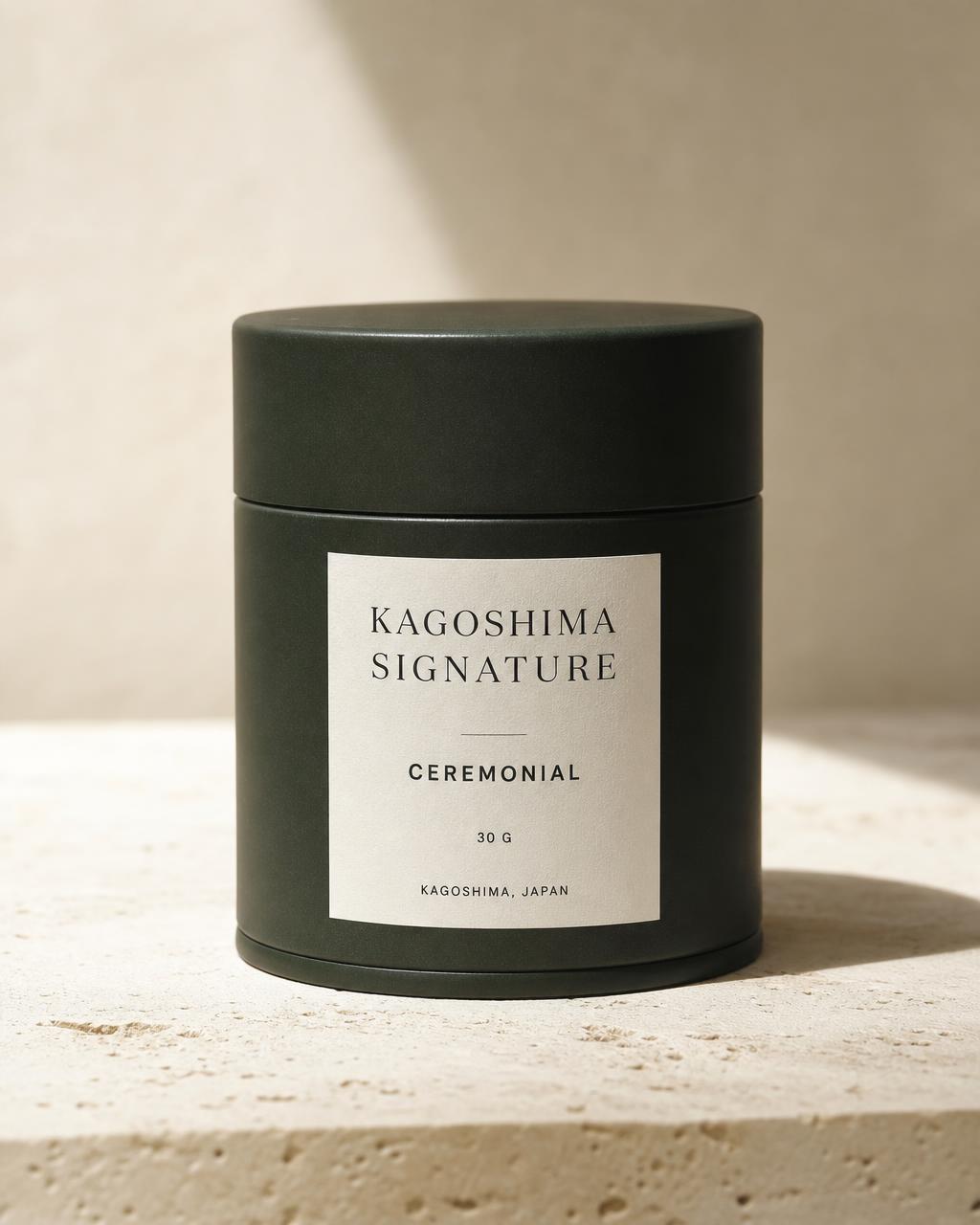
Kagoshima Signature
  1. 01Rinse the chawan with hot water and soak the chasen tips; dry the bowl.
  2. 02Sift 2 g of matcha into the bowl.
  3. 03Add 70 ml water and whisk fast from the wrist, tip just off the floor.
  4. 04Lift the whisk up through the centre to break large bubbles. Drink within a minute.
Traditional / Thick

Koicha

Thick tea — concentrated, syrupy, no foam. Reserve grade only; a lesser lot has nowhere to hide at this concentration.

Matcha
4 g (2 tsp, sifted)
Water
40 ml · 160°F
Whisk
Slow kneading motion, ~30s
Best for
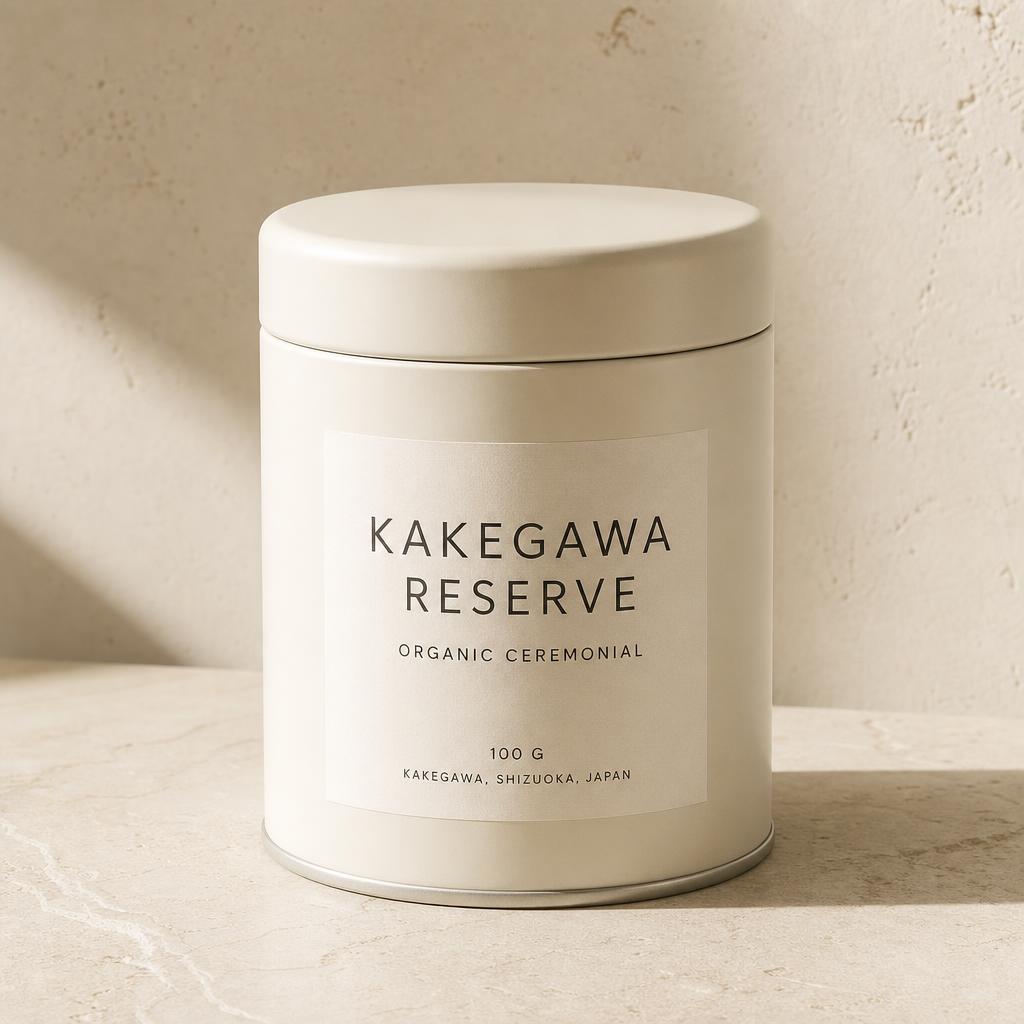
Kakegawa Reserve
  1. 01Sift 4 g into a warmed bowl.
  2. 02Add about half the water and fold it into a smooth paste — no whipping.
  3. 03Add the remainder and knead until it moves like warm honey.
  4. 04Serve immediately in three deliberate sips.
Café / Menu

Matcha latte

Whisk a shot, then combine with milk. Café grade is built for this — it holds its line against dairy instead of disappearing into it.

Matcha
2 g (1 tsp)
Water
60 ml · 175°F
Milk
8 oz, steamed to 140°F
Best for
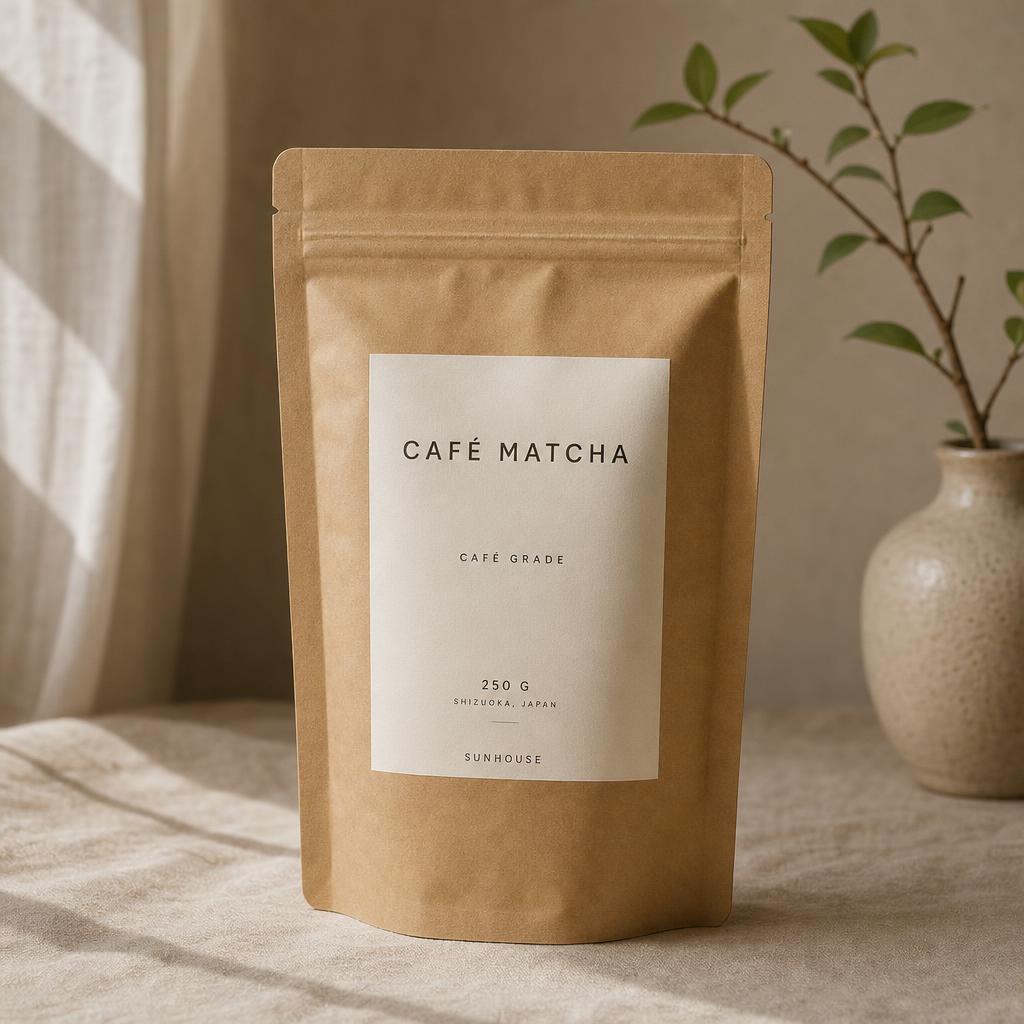
Café Matcha
  1. 01Whisk 2 g with 60 ml water into a smooth shot.
  2. 02Steam milk to 140°F — hotter and the lactose sweetness turns cloying.
  3. 03Pour the shot into the cup first, then the milk, for a clean gradient.
  4. 04For oat milk, drop to 1.5 g; barley notes read heavier than dairy.
Café / Warm weather

Iced latte

The highest-volume matcha drink in most cafés and the easiest to get wrong. Dilution is the whole problem — solve it before the ice does.

Matcha
2 g
Water
50 ml · 175°F
Build
Shot → ice → 8 oz cold milk
Best for
Café Matcha
  1. 01Whisk a slightly concentrated shot — 2 g to 50 ml.
  2. 02Chill it over a single cube or with 20 ml cold water before it meets the glass.
  3. 03Fill with ice, add cold milk, and stir once from the bottom.
  4. 04Never pour hot matcha straight onto ice; you get a watery top and sludge below.
Traditional / No whisk

Cold brew

Matcha shaken with cold water. Almost no astringency extracts at refrigerator temperature, so the sweetness runs forward — the best way to taste a lot's raw character.

Matcha
2 g
Water
300 ml cold, filtered
Method
Shake 20s, rest 5 min, shake
Best for
Kakegawa Reserve
  1. 01Sift 2 g into a sealed bottle with 300 ml cold water.
  2. 02Shake hard for 20 seconds.
  3. 03Rest 5 minutes, shake again, and serve over ice.
  4. 04Holds in the fridge for 12 hours; shake before each pour.
For the trade

Holding quality across two hundred drinks.

Everything above assumes one bowl at a time. Service is a different problem: consistency under pressure, and a cost per drink that works on the menu.

Batch concentrate

Ratio
20 g : 100 ml
Yield
10 drink shots
Peak window
4 hours, refrigerated
Hard stop
8 hours

Whisk or blend at 175°F, cool immediately in an ice bath, and hold covered. Colour shifts olive before the flavour turns, so use colour as your early warning and batch to your real pace rather than to the top of the shift.

Yield per package

30 g tin
~15 bowls / 20 lattes
100 g bag
~50 bowls / 66 lattes
500 g bag
~250 bowls / 333 lattes
1 kg bag
~500 bowls / 666 lattes

Latte yields assume 1.5 g per 12 oz drink; straight bowls assume 2 g. Weigh your first fifty drinks — most bars discover they are dosing 20% heavy, which is the fastest margin you will ever recover.

Station setup

Dosing
Scale or calibrated scoop
Water
Fixed-temp kettle, 175°F
Mixing
Frother or shaker
Storage
Sealed, cold, out of light

Keep the working tin small and refill it from cold storage once a shift. A large open tin sitting on a warm bar oxidises in days — the powder dulls to khaki and the aroma goes hay-like.

Wholesale

Building a matcha program?

We work with cafés and matcha bars on volume pricing, recurring supply and menu specs for their exact milk and cup sizes.

Open a trade account
Diagnostics

If the bowl is wrong.

Nearly every complaint traces back to one of six causes. Work down the list in order.

Bitter, drying finish

CauseWater above 180°F, or a café grade drunk straight.

FixDrop to 165–175°F. For straight drinking, move to a ceremonial lot.

Gritty last sip

CauseUnsifted powder, or whisking that never fully suspended it.

FixAlways sift. Whisk a full 20–30 seconds and drink within a minute.

No foam

CauseChasen too stiff, too little water movement, or stale powder.

FixSoak the whisk first, whisk from the wrist, and check the lot's date.

Flat, hay-like aroma

CauseOxidation — the tin has been open and warm too long.

FixSeal, refrigerate, and keep the working tin small.

Disappears in the latte

CauseDose too low, or a delicate ceremonial lot fighting 12 oz of milk.

FixRaise to 2 g, or switch to a café grade built for contrast.

Watery iced drink

CauseHot shot poured directly onto ice.

FixChill the shot first and build shot → ice → milk.

Pairing

Match the lot to the method.

Grade is a design decision, not a ranking. Pick for what you are actually making.

Keeping it

Storage and shelf life.

  • · Air, heat, light and moisture are the four enemies, in that order.
  • · Sealed and refrigerated, an unopened package holds its character for about a year from milling.
  • · Once open, aim to finish a 30 g tin within 4–6 weeks. It stays safe far longer; it simply stops being remarkable.
  • · Let a cold tin come to room temperature before opening, or condensation will clump the powder.
  • · Never store matcha next to coffee or spices — it takes on aroma from the air around it.
  • · We ship 30 g in sealed tins and bulk sizes in high-barrier foil; decant bulk into a small working tin and keep the rest closed and cold.
Equipment

The short list

  • · Chawan (matcha bowl), wide and flat-floored
  • · Chasen (bamboo whisk, 80–100 prong)
  • · Chashaku (bamboo scoop) or 1 tsp measure
  • · Fine-mesh sifter
  • · Variable-temperature kettle or a thermometer
  • · 0.1 g scale — optional, but it ends the guesswork

A shaker bottle and a frother will carry you a long way for lattes and iced drinks. The bamboo matters for usucha and koicha, where texture is the point.

Lexicon

The words worth knowing.

Not decoration — these terms are how growers, millers and importers actually describe the tea.

Usucha (薄茶)
Thin tea. The standard bowl: ~2 g whisked with 70 ml of water.
Koicha (濃茶)
Thick tea. ~4 g kneaded into 40 ml — reserved for the finest lots.
Tencha
The de-stemmed, de-veined leaf that gets stone-milled into matcha.
Ichibancha
First flush. The spring harvest, highest in amino acids and sweetness.
Shade growing (kabuse)
Covering the plants for weeks pre-harvest raises chlorophyll and L-theanine — the source of matcha's colour and umami.
Umami
The savoury depth of a well-grown lot, carried by L-theanine and glutamates.
Chasen / Chawan / Chashaku
Whisk, bowl, scoop — the three tools of preparation.
Single lot
One farm, one harvest, one milling run. What we import, so the cup is repeatable and traceable.
Questions

Asked most often.

What water temperature should I use for matcha?

165–175°F (74–79°C) for usucha and lattes, and 160°F (71°C) for koicha. Above 180°F the amino acids that carry sweetness break down and the catechins dominate, which reads as bitterness.

How much matcha per serving?

2 g (about 1 heaped chashaku scoop or 1 level tsp) for a standard usucha bowl, 4 g for koicha, and 1.5–2 g for a 12 oz latte. A 30 g tin yields roughly 15 bowls or 20 lattes.

Do I need a bamboo whisk?

For usucha and koicha, yes — a chasen suspends the particles without shearing them, which is what builds the foam and the texture. For lattes and iced drinks, a shaker bottle or a milk frother is fine and faster on a bar.

Why is my matcha bitter or gritty?

Bitterness is almost always water that is too hot or a café-grade matcha used for straight drinking. Grit is unsifted powder or under-whisking — sift, then whisk briskly for a full 20–30 seconds.

Can matcha be batched for a café?

Yes. Whisk a concentrate at a 1:5 matcha-to-water ratio, hold it refrigerated, and use it within 4 hours for peak flavor and within 8 hours at the outside. Colour and aroma fall off before the drink tastes wrong, so batch to your actual pace.

More on shipping, packaging and returns in the full FAQ.

Now you know how to whisk it

Choose a lot to practice on.

Each lot page lists its cup profile and the preparation it was chosen for. Free U.S. shipping on orders $50+.

Shop current lots